
If I had to boil this guide down, I’d say this: a victim impact statement is usually used in criminal sentencing, it is optional, and it should focus on facts, daily impact, costs, and lasting effects. It is not the same as a civil injury claim, where the main issue is money damages backed by records and expert proof.
Here’s the short version:
- What it is: a written or spoken statement about how a crime affected the victim
- When it’s used: most often after a plea or guilty verdict, before sentencing
- Who may submit one: usually the direct victim, and sometimes family or others who saw the changes
- What to include: pain, treatment, missed work, mental health effects, bills, and changes to daily life
- What to avoid: guesses, unrelated claims, and arguments about what punishment should be
- What helps most: records like medical bills, pay stubs, receipts, and a pain diary
- Where else it may matter: parole, probation, and restitution decisions
A few facts matter here. In the U.S., victim participation rights vary by court and state, but victim statements are a common part of sentencing. And while restitution may cover money losses like medical bills or lost income, it may not fully reflect harms like fear, stress, sleep loss, or loss of enjoyment of life.
If I’m writing one, my goal is simple: show the court what changed, how often, and how much it has cost me in daily life.
This article explains that process in plain English.
What a Victim Impact Statement Is in U.S. Law
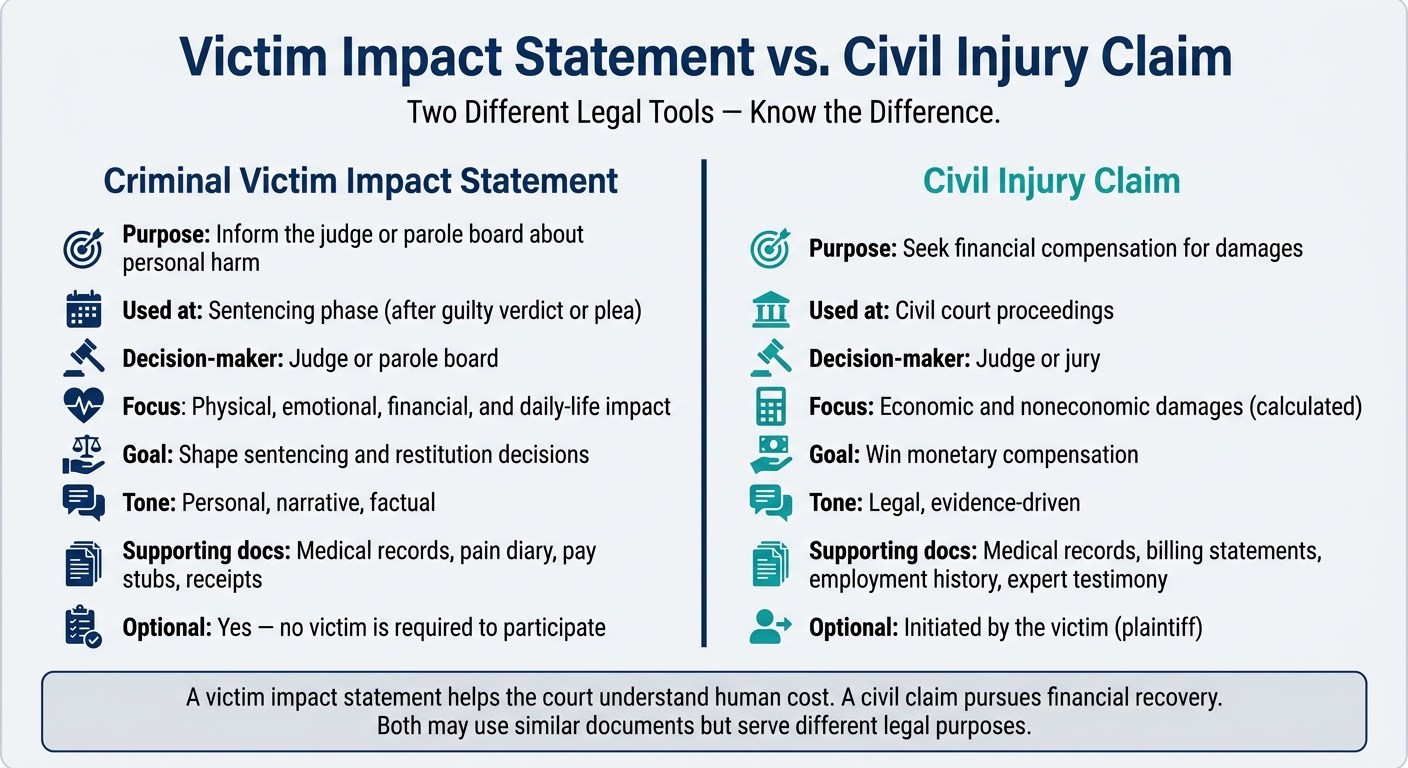
Victim Impact Statement vs. Civil Injury Claim: Key Differences
A victim impact statement is a written or spoken statement used in criminal cases, most often at sentencing. It gives victims or their families a chance to explain the harm caused by the offense.
That harm can include physical injuries, long-term medical effects, emotional distress, financial losses, and the need for restitution. In plain terms, the statement puts the damage into personal, concrete words instead of leaving it as a case file or charge sheet.
When and Where It Is Used
Victim impact statements are used in criminal court during the sentencing phase. That happens after a guilty verdict or plea and before the judge gives the final sentence.
In some cases, these statements also come up at parole or release hearings. Because they can shape how decision-makers understand the harm, both the content and the tone matter a lot.
How It Differs From Civil Injury Statements
A criminal victim impact statement is not the same thing as civil injury evidence.
In a criminal case, the statement is aimed at the judge or parole board. Its job is to describe the personal harm caused by the offense.
In a civil case, the focus is different. The goal is financial compensation, backed by medical records, billing statements, employment history, and expert testimony used to calculate economic and noneconomic damages.
A criminal statement helps inform sentencing. Civil evidence is used to support compensation. Next, the guide explains who may submit a statement and what limits apply.
sbb-itb-68ed374
Legal Rights, Requirements, and Limits
In the United States, crime victims can submit a victim impact statement to help the court understand the harm caused by the offense. This is optional. No victim has to take part. From there, the main issues are who can submit a statement and what the court will allow.
Who May Submit a Statement
The direct victim is usually the person who submits the statement. In some cases, courts may also review written accounts from friends, family members, or co-workers. These accounts should describe changes they have personally seen in the victim’s health, behavior, or day-to-day function.
Rules about eligibility and filing can change from one court to another. Because of that, it’s smart to check with the prosecutor’s office or the victim services coordinator handling the case. Once you know who can file, the next step is knowing what belongs in the statement.
What Information Is Allowed or Restricted
The statement should focus on the practical impact of the incident. That can include:
- Physical injuries and medical treatment
- Lost wages, care needs, and lasting effects on daily life
Leave out unrelated accusations, guesswork, and arguments about punishment. The court needs a clear picture of how the harm affected the victim in personal, day-to-day terms so it can measure that harm with care.
Disclosure, Privacy, and Court Review
Victim impact statements are usually reviewed by the court and may be shared with counsel under local court rules. Write with that in mind. If you wouldn’t want a judge, defense counsel, or another authorized party to read a detail, don’t include it.
How to Prepare a Clear Victim Impact Statement
With the court’s limits in mind, stick to facts that show the day-to-day impact of the injury. Write in clear, specific terms. Show how the incident changed your life, not just how it made you feel in the moment.
The point is simple: help the court see the harm when it decides sentencing or restitution.
Key Details to Include
Use concrete details instead of broad statements. It also helps to group the statement by type of harm so the court can scan it fast.
| Category of Harm | Specific Details to Include | Supporting Evidence |
|---|---|---|
| Physical Impact | Pain levels, reduced range of motion, sleep loss, mobility limits, such as trouble walking or lifting | ER admission charts, X-rays, MRIs |
| Emotional and Psychological | Anxiety, depression, PTSD symptoms, fear of driving or returning to the area | Mental health records or evaluations |
| Financial Losses | Medical bills, pharmacy receipts, lost wages, out-of-pocket costs for medical devices or help at home | Pay stubs, receipts, billing statements |
| Life Disruptions | Missed work, family events, and hobbies, strained relationships | Pain diary, statements from friends or family, employer letters |
Documents help because they tie your statement to records. That matters. If you say you missed work, pay stubs and an employer letter back that up. If you describe pain and treatment, medical bills, pharmacy receipts, and imaging records help show the same story from another angle.
For symptoms that continue over time, track them every day. A daily pain diary can go a long way. Write down your pain level, sleep loss, emotional stress, and missed activities in your own words each day.
Common Mistakes and Emotional Challenges
Writing the statement is one part of the job. The other part is avoiding weak or unclear wording. Talking about the event can be hard, especially if you may have to speak at a hearing. That emotional strain can make people go vague, skip details, or tell the story a little differently each time.
The most common mistake is not showing the court the full effect of the injury. Vague language doesn’t give the court much to use. Inconsistent accounts or gaps in treatment can also hurt your case.
Try to avoid gaps in care by going to follow-up medical or psychological appointments. Missed visits may be used to argue that the injuries are not as serious as described. If the process starts to feel heavy, get professional support early. That can help you keep the statement clear, focused, and complete.
Support From Ocala Injury Law

If your victim impact statement is part of a broader injury claim, Ocala Injury Law can help organize the supporting records with individualized attention and compassionate support. The firm offers free initial consultations to help victims understand their rights and potential paths forward.
Court Use, Ongoing Proceedings, and Final Summary
How Courts and Agencies Use the Statement
After you file the statement, the court may use it at sentencing and when deciding restitution. Judges look at it alongside sentencing guidelines and mandatory minimums to set a lawful sentence. The statement doesn’t change the law, but it can help the court understand the human cost of the crime.
Courts may also review victim impact statements in probation or parole hearings, and sometimes in restitution-related proceedings. The statement, along with supporting records, can help the court decide restitution for medical bills, lost wages, and other financial losses. If you’re unsure how that process works, victim services staff can walk you through the restitution steps and hearing procedures.
Restitution is meant to cover economic losses. Your statement does something different: it shows harm that doesn’t fit neatly into a dollar amount, like loss of enjoyment of life, emotional distress, and mental anguish. That’s why a clear, specific statement can matter so much, even when part of the harm can’t be measured in money.
Conclusion: Key Points to Remember
A victim impact statement gives victims a direct voice at sentencing, and it can still matter in later proceedings. When the statement includes clear facts, specific examples, and supporting documents, it gives the court a better picture of the full impact of the harm.
If your statement is tied to a broader personal injury claim, Ocala Injury Law offers free initial consultations to help you understand your options and organize the evidence that supports your case.
FAQs
Can I update my statement later?
In Florida, Victim Impact Statements should be submitted as soon as possible so they can be reviewed during sentencing. Specific deadlines and filing steps may apply.
If you have questions or need an update, contact the Assistant State Attorney, your Victim Witness Specialist, or the State Attorney’s Office right away. Waiting too long may affect whether your statement is included.
Should I read it aloud in court?
Whether to read your victim impact statement aloud in court is a personal choice. You can hand it in as a written statement, read it out loud, or do both.
Reading it aloud gives the judge a chance to hear your voice and witness your emotions firsthand. That can add a strong personal element to what you’re saying. Court can be emotional, though, so writing your statement ahead of time can help you stay focused and say what you want to say.
What if I have no documents?
If you don’t have documents yet, you’re not alone. That happens a lot. Still, collecting them matters because they can play a big part in the legal process.
For a Victim Impact Statement, the State Attorney’s Office must help you prepare it if you need assistance.
In personal injury cases, Ocala Injury Law can help you figure out which records may matter and what steps to take next while protecting your rights.